Perfectly Imperfect
Perfectly Imperfect
Prior to my position in Sag Harbor Schools, I worked as a parental leave replacement in East Hampton Middle School. For English class they used one of those doorstop anthologies that shared short stories and selected excerpts from fine literature. I imagine we all remember reading some of those-along with short stories and novels that have infiltrated and taken up residency in our bones. Every time I encounter cobwebs, I can’t help but think of Miss Havisham.
One story from that anthology has always stayed with me. Although I have searched, I cannot find the exact rendition - but it revisits every time I am out in the garden-the main thrust of the story went something like this:
A queen rules over a kingdom where everything is carefully planned and perfectly arranged. Her gardens are symmetrical, tidy, and controlled. One day she discovers a hidden garden, filled with winding paths, flowers growing where they please, bumble bees, unexpected colors, and delightful surprises. At first the disorder troubles her, but gradually she realizes that the garden possesses a beauty and joy that her perfect gardens lack. The queen learns that life does not have to be flawless to be wonderful. From then on, she visits the garden regularly, finding peace and delight in its natural imperfection.
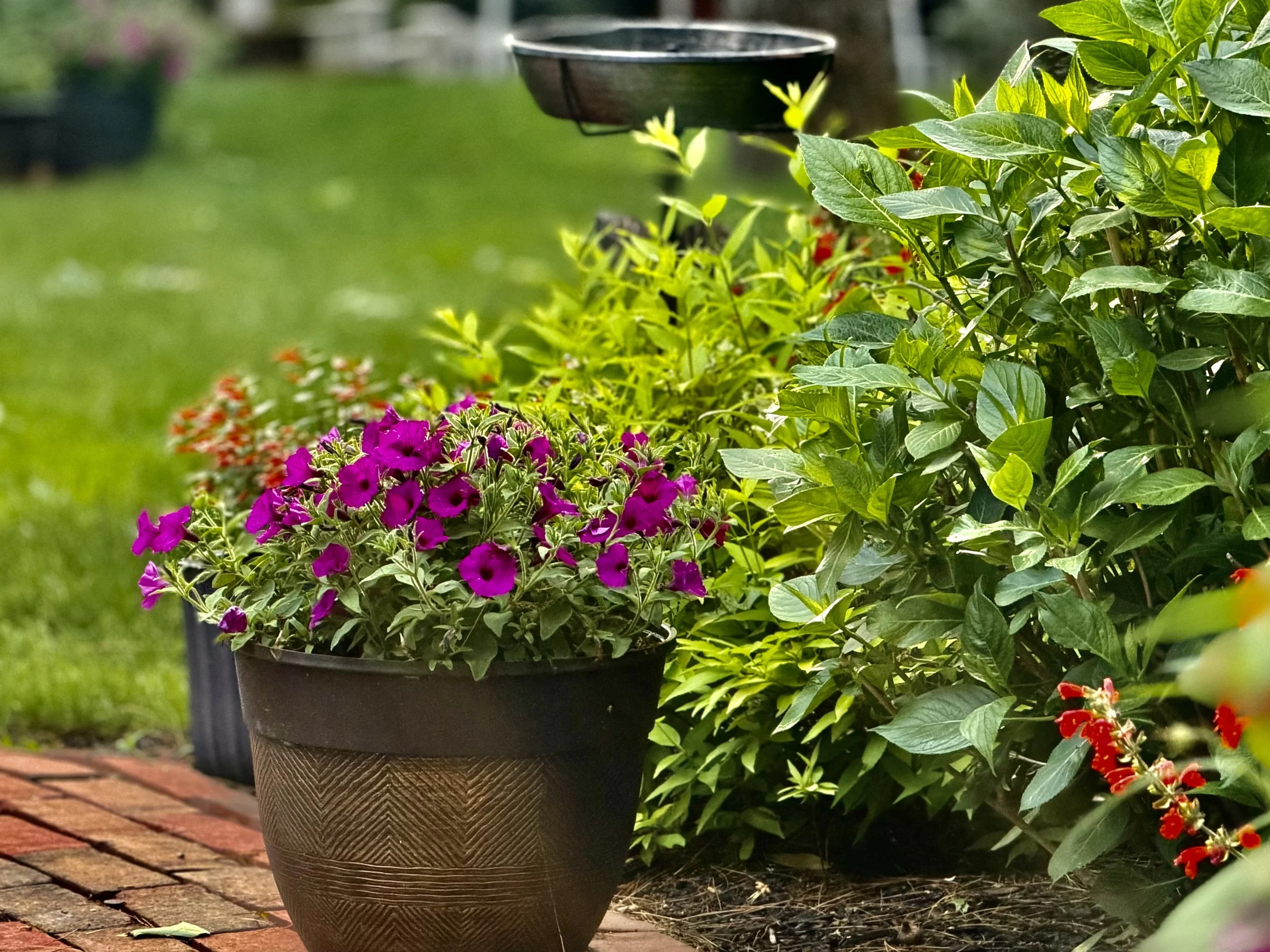
This story has stayed with me for nearly 50 years, reminding me that occasional weeds do have their place – along with welcoming bees, and chipmunks and a veritable posse of gray squirrels - feeling at peace with floating pollen catkins, a carpet of pine needles, crabgrass, ragweed, dandelions, and moss – and of course weeds posing as wildflowers. It is plausible to Invite magenta and red flowers to live as neighbors- imperfection around every corner. I think perhaps that is how gardens were intended to be – in the absence of professional gardeners and manicured perfection.
Perfectionism is like that-if you’re around it long enough it starts seeping into your bones and leaves little room for - “good enough’ or ‘I’ll get to that later’! And like any other behavioral habit it might start defining you and getting in the way. So perhaps now and then-it is OK to invite imperfection in.
Though beautiful, nature itself is not flawless - and hopefully our gardens and our lives can follow suit …and allow some room for raggle-taggle, helter-kelter, mish-mosh, and just plain - good enough.