A Chance Meeting
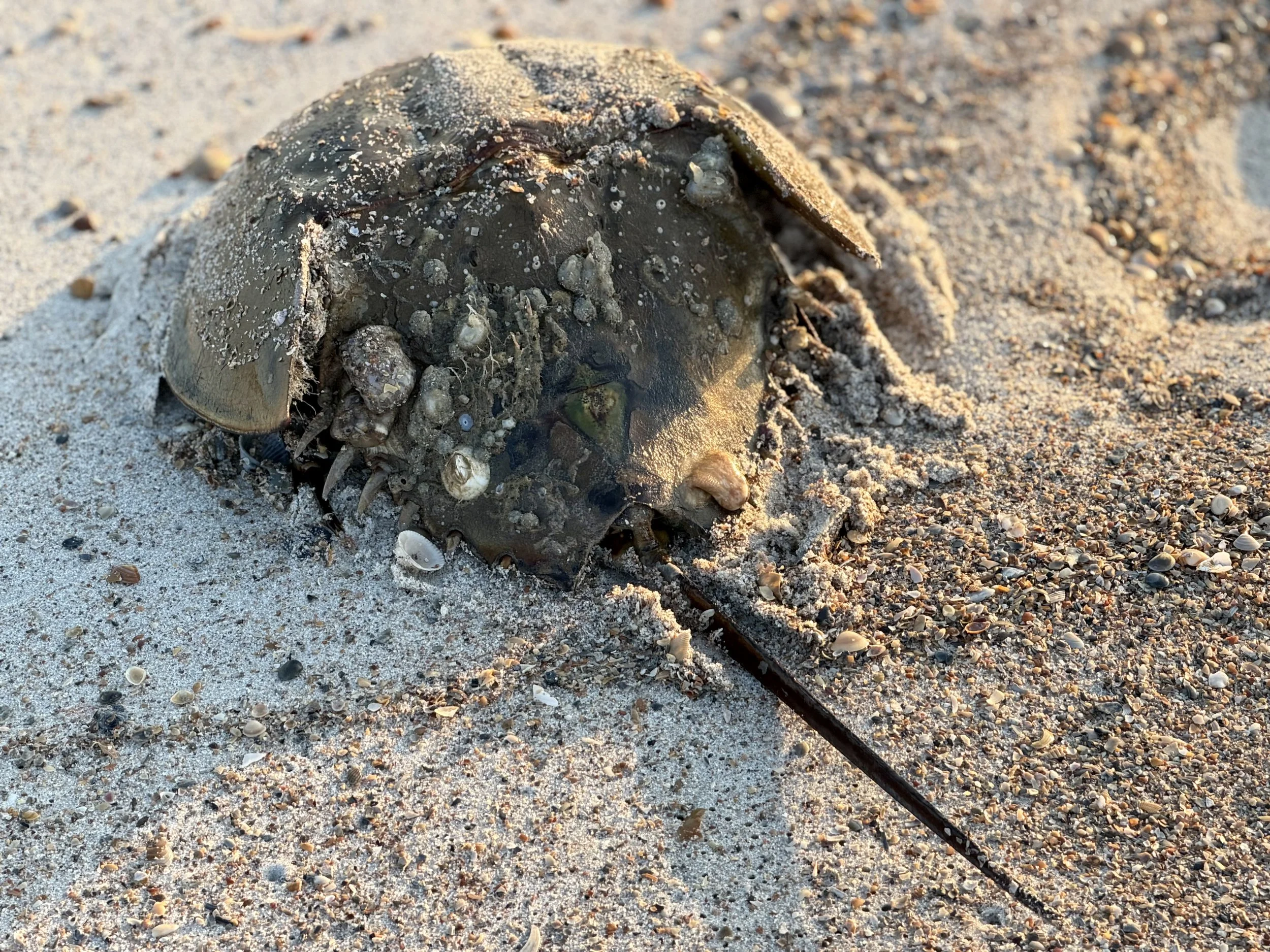
I found her in the sand belly up-motionless-flies circling around her anticipating her final breath-a bit beyond the high water mark it looked as if her days had come to an end. I cautiously approached to assess the situation and see if I could be of some help. Growing up on a creek I was familiar with horseshoe crabs but don’t think I had ever come across one so large- she must have been ocean worthy and donned some barnacles and shell appendages that told stories of age and glory. I gently lifted her shell to see if there was any life remaining-and as soon as she was turned over her telson began a quiet slide left and right. The sun was growing hotter so it felt as if she needed to get back into the sea. I carried her to the water’s edge-her feet now starting to pedal the air preparing for movement and a quiet return home.
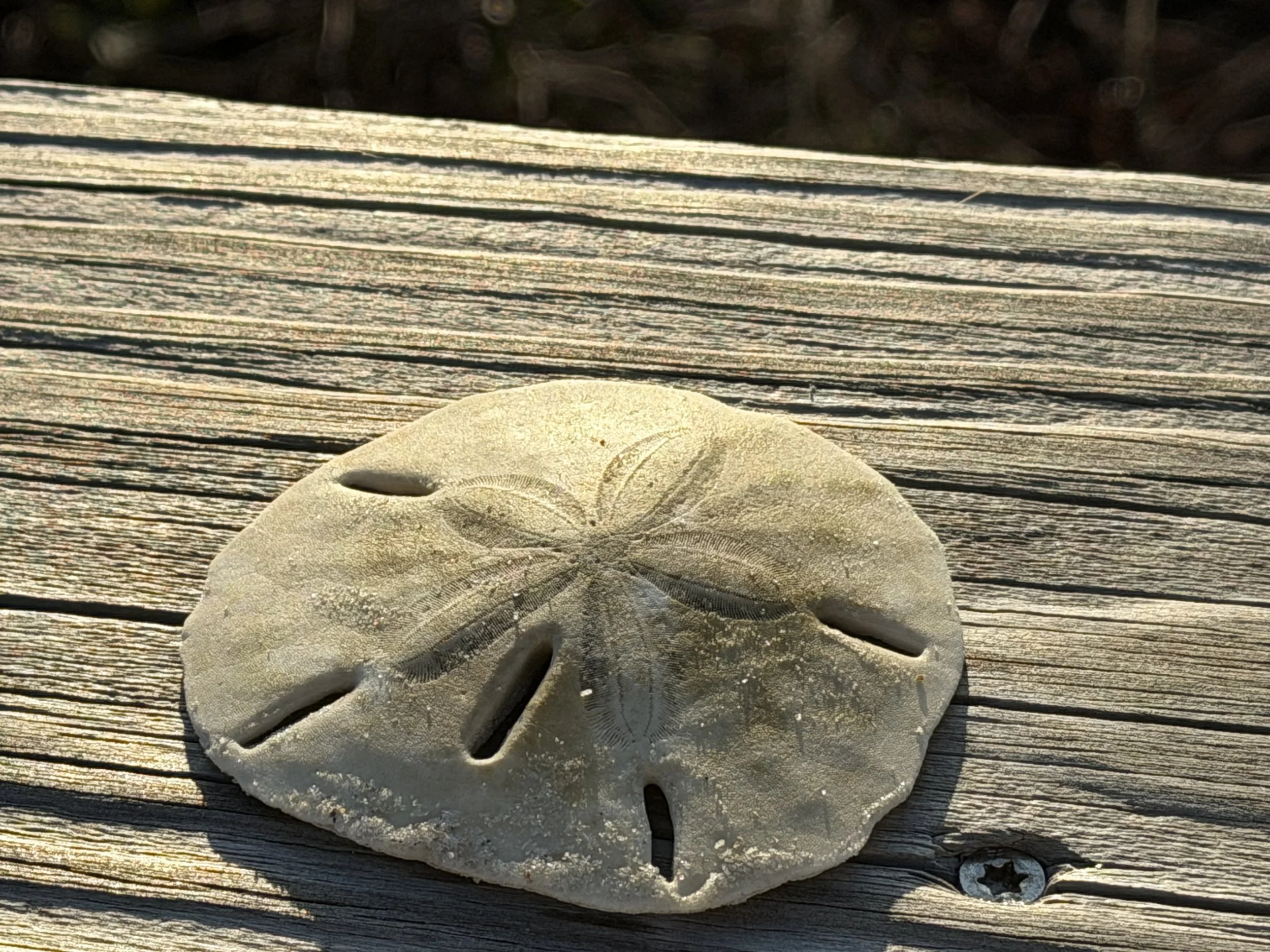
At the shoreline she found her footing and started to crawl back into the sea, to life and to freedom. After she was securely on her way, and bidding her Godspeed and farewell, I continued my morning walk. Just a few feet onward, there at the wrack line , was an unbroken sand dollar - a rare find -and I thought…. how funny - a gift from the universe for a job well done. I was not of course expecting payment, but I accepted the sand dollar gratefully and continued on. It was truly a remarkable feeling to save a life – each little critter significant in this diverse and magnificent world.
I read that horseshoe crabs are often seen as "living fossils" that have existed for over 445 million years, pre-dating even the dinosaurs by more than 200 million years. They are considered marine arthropods related to arachnids (spiders and scorpions) rather than true crabs.
Though horseshoe crabs are not considered extinct even in Long Island Sound they are vulnerable to extinction. Their populations are declining due to overharvesting for bait, biomedical use, habitat loss, and climate change. Local organizations are working to protect them and their environment. I had no idea that horseshoe crab blood was so valuable, used as a in modern medicine to detect life-threatening bacterial contaminants in vaccines, injectable drugs, and medical devices.
This chance meeting was a heartfelt reminder of the wonders and interconnectedness of all creation. If horseshoe crabs have survived for 445 million years, I surely hope they don’t disappear on our watch. We are the protectors, the guardians of creation- each little life saved is a step toward conservation, preservation and a hope for helping earth to remain a hospitable home for all.